How Can Scientists Track a Humpback Whale’s Underwater Movement Using Acoustic Data?
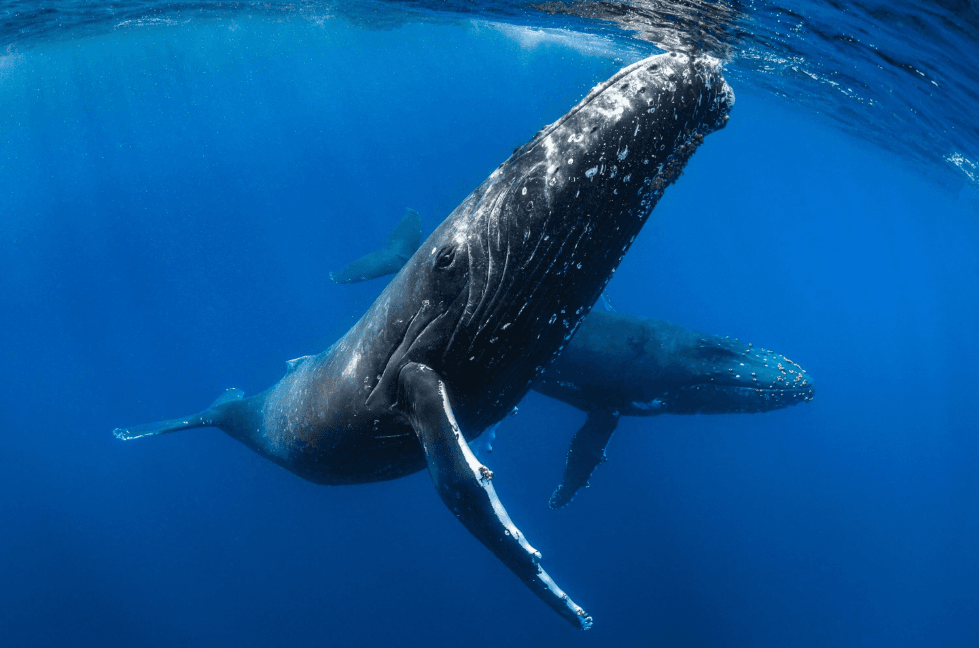
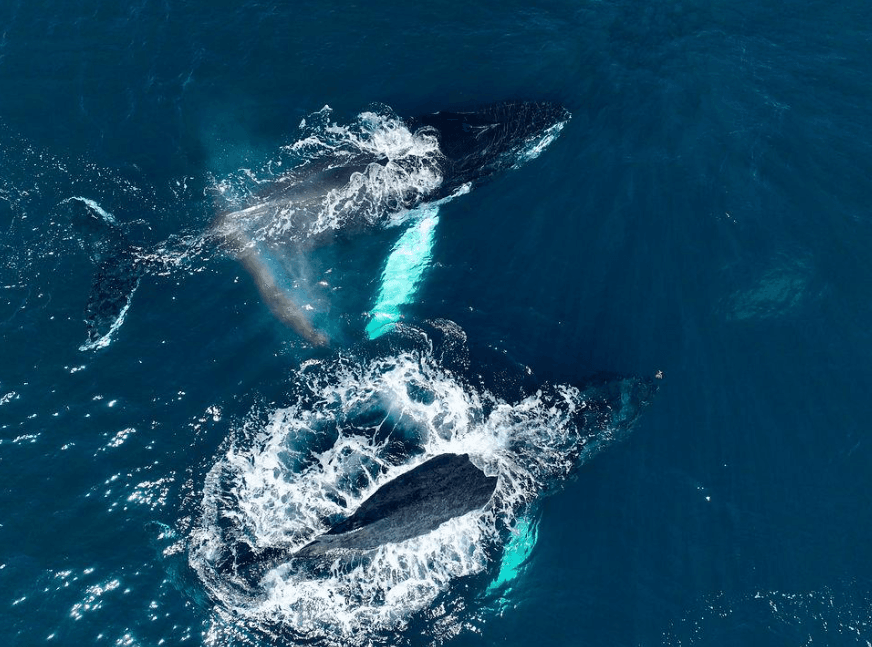
Humpback whales spend much of their lives moving through an underwater environment that humans cannot observe directly. Even when a whale is visible at the surface, its route beneath the water may remain hidden until it appears again somewhere else.
Scientists can investigate this hidden movement using underwater acoustic data. By recording whale sounds at known locations and examining how those sounds change over time, researchers can sometimes estimate where a vocalizing whale is moving and how its position changes.
However, tracking an underwater animal through sound is more complicated than following a visible whale from a boat. A hydrophone records sound, not the animal itself. To reconstruct movement, researchers must connect observations across time, distinguish the whale’s sounds from background noise, and account for uncertainty in the estimated positions.
Understanding these methods reveals another dimension of humpback whale research and helps explain how scientists investigate whale behavior in breeding areas such as Samaná Bay in the Dominican Republic.
What Is Acoustic Tracking?
Acoustic tracking is the process of using sound measurements to investigate the location or movement of a sound source.
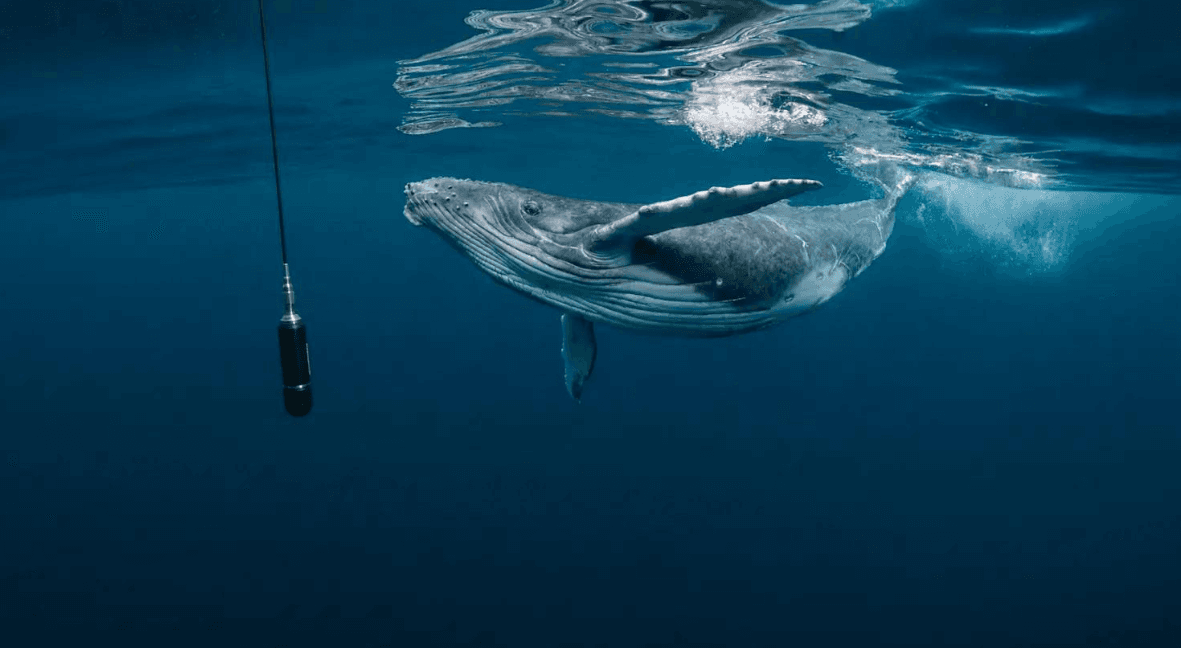
In humpback whale research, scientists may use hydrophones to record songs and calls produced underwater. When the recording system provides enough information, researchers can estimate the location of the animal producing those sounds.
Repeated estimates can then be compared to investigate movement.
For example, if a research system estimates a whale’s position at several different times, scientists may be able to determine whether the animal moved horizontally, changed direction, or remained within a limited area.
The strength of the conclusion depends on the quality of the observations. A series of reliable positions can support a movement estimate, while isolated recordings may reveal little about the whale’s actual route.
Acoustic tracking is therefore not simply a matter of hearing a whale. It requires a suitable recording arrangement, analytical methods, and evidence that the recorded sounds belong to the source being tracked.
1. Recording Whale Sounds at Known Locations
The first step is collecting underwater sound recordings.
Hydrophones can be placed at known positions using moorings, underwater recording stations, or research equipment deployed from vessels. Some monitoring systems use one instrument, while others use several hydrophones arranged to collect complementary measurements.
When a humpback whale vocalizes within detection range, its sound may be recorded by one or more instruments.
Researchers can examine the timing, frequency content, and structure of the recordings to identify likely whale vocalizations. They may compare repeated sound patterns to help determine whether recordings from different stations contain the same event.
Knowing the locations of the recording instruments is essential. If scientists do not know where a hydrophone was positioned when it recorded a sound, interpreting the source’s location becomes more difficult.
The recording system must also have suitable timing accuracy, especially when researchers intend to compare when the same sound reaches multiple instruments.
2. Estimating the Whale’s Position
Before scientists can investigate movement, they need to estimate the whale’s position at one or more moments.
Several acoustic methods can contribute to this process. One approach compares the arrival times of the same vocalization at different hydrophones. Another uses differences in the signals recorded by multiple sensors to help constrain the source location.
These techniques can sometimes estimate the source’s horizontal position and, when the arrangement and data support it, its vertical position.
The exact method depends on the equipment, the spacing of the instruments, the underwater environment, and the characteristics of the sound being recorded.
Researchers must also consider the possibility that different hydrophones have recorded different whales. If several humpbacks are vocalizing at once, incorrectly matching sounds can produce misleading location estimates.
For that reason, source localization is an important step in acoustic tracking, but it is not sufficient on its own. Scientists must also establish whether the estimated positions represent the same whale or at least the same identifiable sound source.
3. Connecting Positions Over Time
The next challenge is determining how a whale’s position changes.
Imagine that a research system produces several position estimates during a period of underwater singing. Scientists can compare these estimates to investigate whether the source appears to remain stationary, move gradually, or change direction.
The sequence of estimates may form a series of points that researchers use to reconstruct a possible movement path.
However, each point has a degree of uncertainty. If the location estimates are imprecise, small apparent movements may reflect measurement error rather than actual swimming.
Researchers therefore assess the accuracy of individual positions before interpreting the overall path. They may use statistical methods to account for uncertainty and distinguish plausible movement from random variation in the estimates.
The time between observations matters, too. Positions collected frequently may reveal short-term changes that widely spaced observations would miss. Conversely, gaps in the data can leave sections of the route unknown.
A reconstructed path should therefore be understood as an estimate based on available observations, not necessarily a complete record of every movement the whale made.
4. Distinguishing a Moving Whale From a Moving Sound
One of the most important challenges in acoustic research is that the path of a sound is not always the same as the path of the animal producing it.
Sound travels through water and can be affected by temperature, salinity, pressure, and underwater boundaries. It may follow indirect paths, reflect off the sea surface or seabed, or reach different hydrophones after traveling different distances.
Consequently, a change in a recorded signal does not automatically indicate that the whale has moved.
For example, a change in arrival time could result from a change in the source’s position, a different sound path, or a mismatch between the sounds recorded by two instruments.
Researchers use information about the environment, the recording arrangement, and the properties of the sound to evaluate these possibilities.
This distinction is especially important in coastal habitats, where the seabed and changing water depth may influence sound propagation.
Reliable movement tracking requires scientists to separate evidence of animal movement from changes caused by how sound travels through the environment.
5. Following Songs and Calls Across Recordings
Humpback whale vocalizations can contain recognizable patterns that help researchers analyze recordings.
Scientists may compare the timing and acoustic structure of vocalizations recorded at different locations. If a particular sound sequence can be identified consistently across instruments, it may help researchers link observations that occurred at different times or places.
Nevertheless, a recognizable song pattern does not automatically identify an individual whale.
Humpback whales can share song patterns, and several animals may sing similar material. A song’s structure may help identify a type of vocalization without proving that the same animal produced every recording.
Researchers must therefore distinguish between tracking a sound pattern and tracking a particular whale.
When individual identity cannot be established, the results may describe the movement of an acoustic source or the distribution of vocal activity rather than the verified route of one animal.
Making this distinction prevents researchers from claiming more than their data demonstrate.
6. Using Multiple Hydrophones to Improve Movement Estimates
A network of hydrophones can provide more information than a single recording station.
When several instruments record the same sound, scientists can compare the observations and use their known positions to constrain the location of the source. Repeating this process can help estimate how that location changes over time.
The arrangement of the instruments affects how useful the measurements are. A system designed for horizontal localization may provide limited information about depth if the instruments are not positioned to support three-dimensional estimates.
Instrument synchronization and accurate position measurements are also important. Even small errors can affect localization when the method relies on differences in sound-arrival times.
More hydrophones do not automatically guarantee a better result. Researchers must consider their spacing, recording quality, background noise, and whether the same vocalization can be identified across the system.
A carefully designed array can provide stronger evidence of movement, but the final estimates still need to include appropriate uncertainty.
7. Combining Acoustic Tracking With Other Research Methods
Acoustic observations can become more informative when compared with independent measurements.
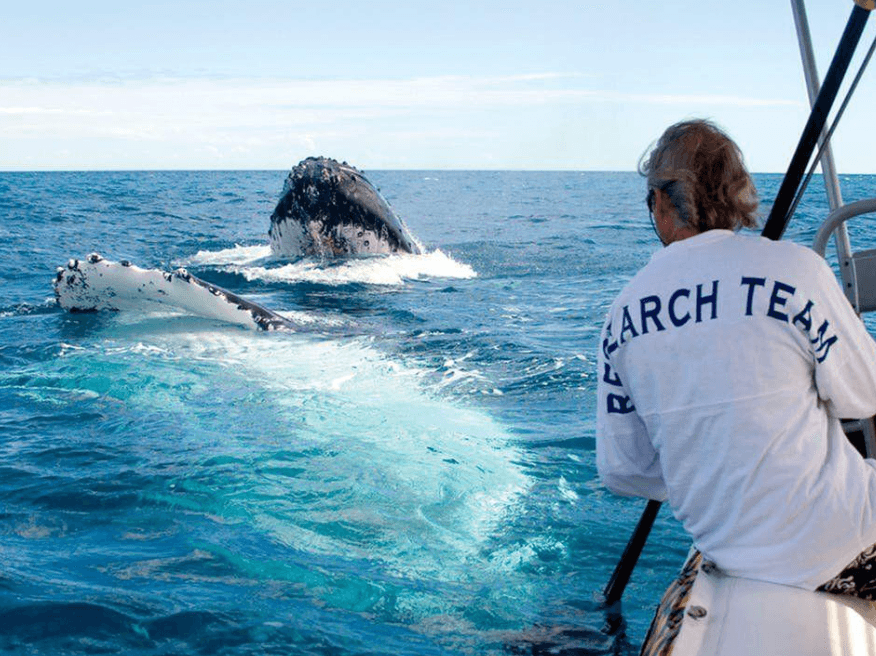
For example, a scientific tag attached to a whale may record movement or depth, depending on the equipment. Visual observations from a research vessel may also help establish when an animal was seen at the surface.
If these observations can be linked reliably to the same animal and time period, they may help researchers evaluate the accuracy of acoustic movement estimates.
Each method has different strengths. Acoustic monitoring can detect vocal activity when a whale is underwater and out of sight. Visual observations can document surface behavior, while suitable tracking tags may provide direct measurements of an instrumented animal’s movement.
These methods are not interchangeable. A sound recording cannot automatically establish which whale produced it, and a visual sighting does not reveal the animal’s entire underwater path.
Combining independent sources of evidence can reduce uncertainty, but only when the measurements are correctly associated and their limitations are understood.
Tagging also requires appropriate permits, specialist expertise, and attention to animal welfare. It is not necessary or appropriate for every study.
8. What Can Scientists Learn From Underwater Movement?
Repeated acoustic observations may help scientists investigate several aspects of humpback whale behavior.
Changes in direction: When position estimates are sufficiently accurate, researchers may examine whether a vocalizing source changes direction during the observation period.
Movement while singing: Researchers can investigate whether an animal appears to move while vocalizing, although determining the behavior of a particular whale requires reliable source identification.
Use of an area: Repeated detections across a monitoring network may help describe where whale vocal activity occurs and how it changes over time.
Relationships with the environment: Researchers may compare movement estimates with water depth, habitat features, or other environmental measurements to explore possible associations.
Patterns in vocal activity: Linking sound observations to location and time can help scientists study where and when vocal activity is detected.
These findings must be interpreted carefully. Acoustic detections show where sounds were recorded, not necessarily every place a whale visited. A whale that is silent or outside the recording system’s detection range may go unnoticed.
Similarly, an association between vocal activity and a particular location does not, by itself, explain why the whale was there.
9. Why Is Tracking Underwater Movement Difficult in Samaná Bay?
Samaná Bay is a well-known destination for seasonal humpback whale watching. Visitors may observe whales surfacing, diving, raising their flukes, and disappearing beneath the water.
Those surface observations provide valuable information, but they do not reveal the full route taken underwater.
Acoustic research in coastal environments may face challenges involving changing water depth, underwater reflections, background noise, and the movement of vessels. Multiple whales vocalizing in the same area can also make it harder to associate a recording with a particular animal.
A study designed to track underwater movement in Samaná would need to select appropriate recording locations and equipment, evaluate local sound propagation, and establish a method for assessing uncertainty.
The methods described in this article are general approaches used in acoustic research. They do not establish that a particular acoustic-tracking project has been conducted in Samaná Bay.
Nevertheless, these techniques illustrate the kinds of questions researchers could investigate about humpback whale movement in a breeding-ground environment.
10. Can Acoustic Tracking Reveal the Whale’s Complete Journey?
Usually, researchers should not assume that acoustic data provide a complete record of a whale’s movement.
A whale may stop vocalizing, move beyond the hydrophones’ detection range, or produce sounds that cannot be separated confidently from those of other animals. Equipment may also record gaps in the data.
When the whale cannot be detected, its exact location may remain unknown until another reliable observation becomes available.
Scientists can sometimes estimate a likely route between observations, but that route depends on assumptions about the animal’s movement and the uncertainty of the available positions.
A continuous track is only justified when the observations and tracking method support that level of detail. Otherwise, it is more accurate to describe a series of estimated positions or a possible movement corridor.
This careful approach is important because a visually complete line on a map can give the impression of certainty even when large sections of the route were never directly measured.
What Does This Mean for Whale Watchers?
For visitors, acoustic tracking offers a way to appreciate the hidden side of humpback whale behavior.
A whale that disappears beneath the surface may continue swimming for some time before it is seen again. Acoustic researchers use specialized equipment and analytical methods to investigate parts of this underwater activity that ordinary surface observation cannot reveal.
However, visitors do not need to determine a whale’s underwater route to enjoy a responsible whale-watching experience.
Watch the animal’s visible behavior, listen to your guide’s explanations, and remember that a dive is only one part of its activity. Avoid assuming that the whale will resurface at a predictable location or that every movement has an obvious explanation.
Responsible viewing practices also matter. Follow your operator’s instructions and applicable wildlife-viewing rules, and allow the whales space to move naturally.
Conclusion
Scientists can track humpback whale underwater movement using acoustic data when their recording systems provide reliable information about the location of vocal sources over time.
Hydrophones capture whale sounds, acoustic localization methods help estimate source positions, and repeated observations can reveal possible changes in location. Researchers may strengthen their conclusions by combining acoustic data with environmental measurements, visual observations, or suitable tracking instruments.
The main challenge is distinguishing genuine animal movement from uncertainty caused by sound propagation, overlapping vocalizations, and gaps in the recordings.
For Samaná whale enthusiasts, this research demonstrates how scientists can investigate behavior beyond the surface. Each visible encounter offers a brief glimpse of a much larger underwater world, while careful acoustic research can help reveal more about how humpback whales use that world.
Planning a Samaná whale-watching trip? Learn about the seasonal whale-watching period, choose a responsible operator, and follow local wildlife-viewing guidance. A thoughtful encounter can deepen your appreciation for humpback whales while respecting their natural behavior.

Local explorer & expert guide in Day Trips Near Me.